Chess.com, kasutades erinevaid tööriistu cheatimise tuvastamiseks vaatas mustreid ja leidis, et 100+ mängu juures on märke, et tüüp kasutas abi.
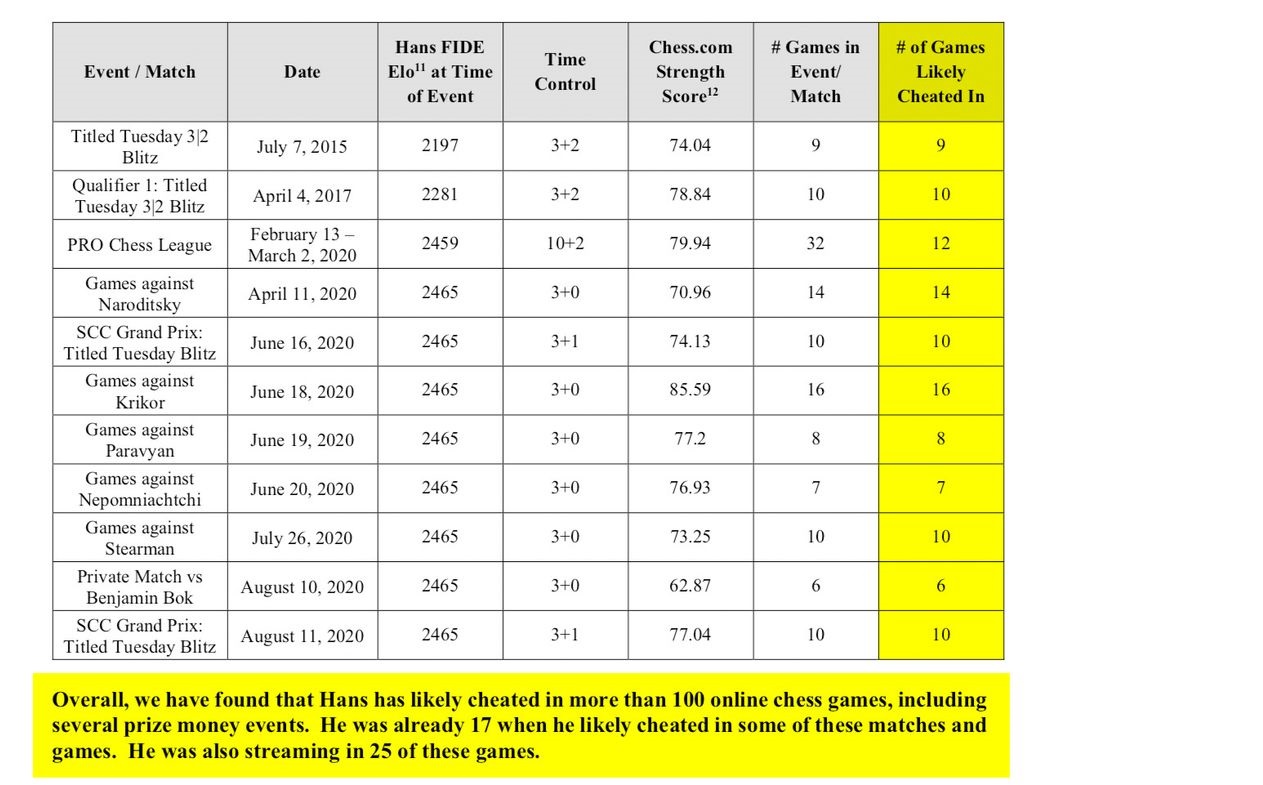
Ja ta tõus on kahtlaselt järsk olnud. Kogu seda haisvat pska kergendab õige pisut see, et u. 4 per 100 suurmeistrist on saidile vahele jäänud, viga tunnistanud ja tagasi pääsenud mängima, sh niemann.
The report, reviewed by The Wall Street Journal, alleges that Niemann likely received illegal assistance in more than 100 online games, as recently as 2020. Those matches included contests in which prize money was on the line. The site uses a variety of cheating-detection tools, including analytics that compare moves to those recommended by chess engines, which are capable of beating even the greatest human players every time. The report states that Niemann privately confessed to the allegations, and that he was subsequently banned from the site for a period of time. The 72-page report also flagged what it described as irregularities in Niemann’s rise through the elite ranks of competitive, in-person chess. It highlights “many remarkable signals and unusual patterns in Hans’ path as a player.”
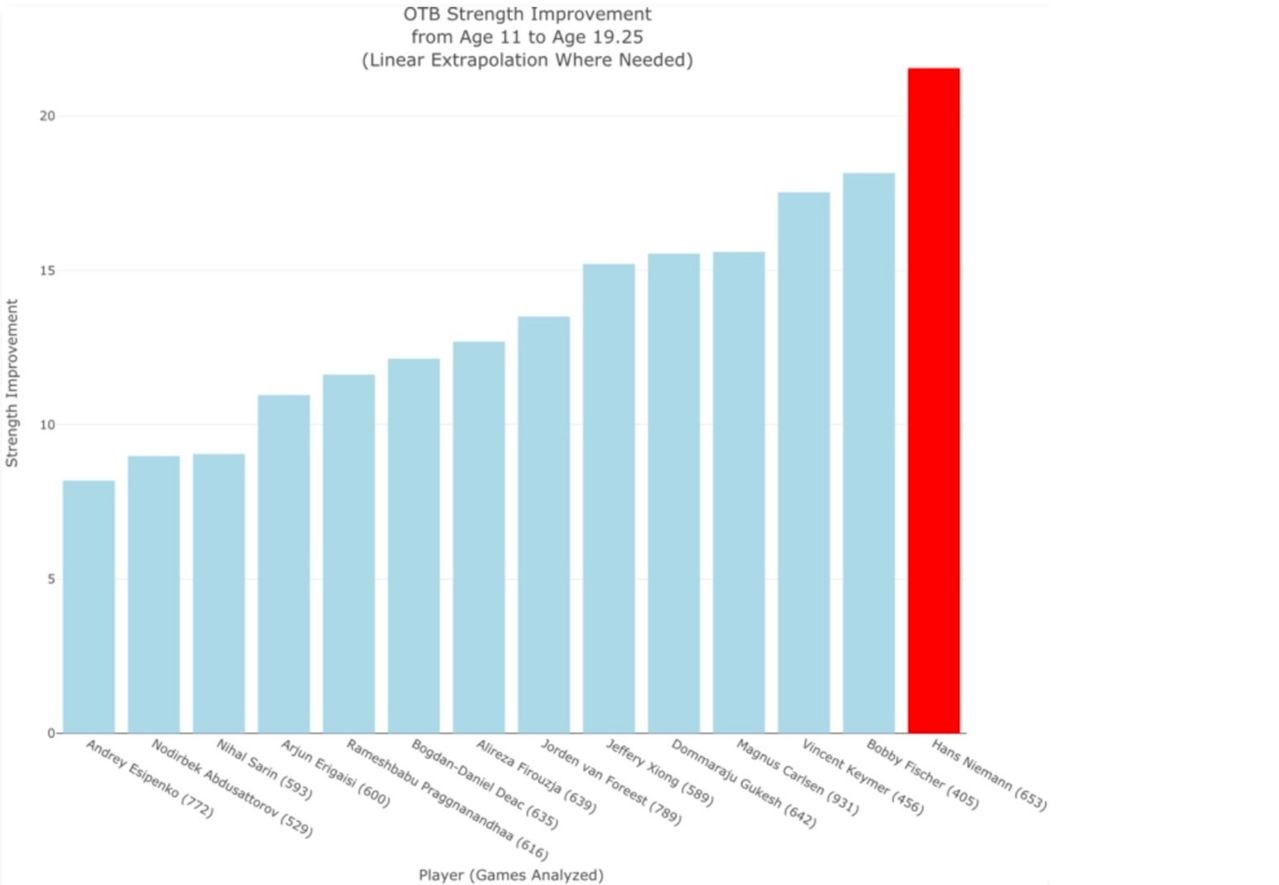
“Outside his online play, Hans is the fastest rising top player in Classical [over-the-board] chess in modern history,” the report says, while comparing his progress to the game’s brightest rising stars. “Looking purely at rating, Hans should be classified as a member of this group of top young players. While we don’t doubt that Hans is a talented player, we note that his results are statistically extraordinary.”
While it says Niemann’s improvement has been “statistically extraordinary,” Chess.com noted that it hasn’t historically been involved with cheat detection for classical over-the-board chess, and it stopped short of any conclusive statements about whether he has cheated in person.
Still, it pointed to several of Niemann’s strongest events, which it believes “merit further investigation based on the data.” FIDE, chess’s world governing body, is conducting its own investigation into the Niemann-Carlsen affair. WSJ
